
What ISO/IEC 17025 Accredited Calibration Means, and Why Your Auditor Cares
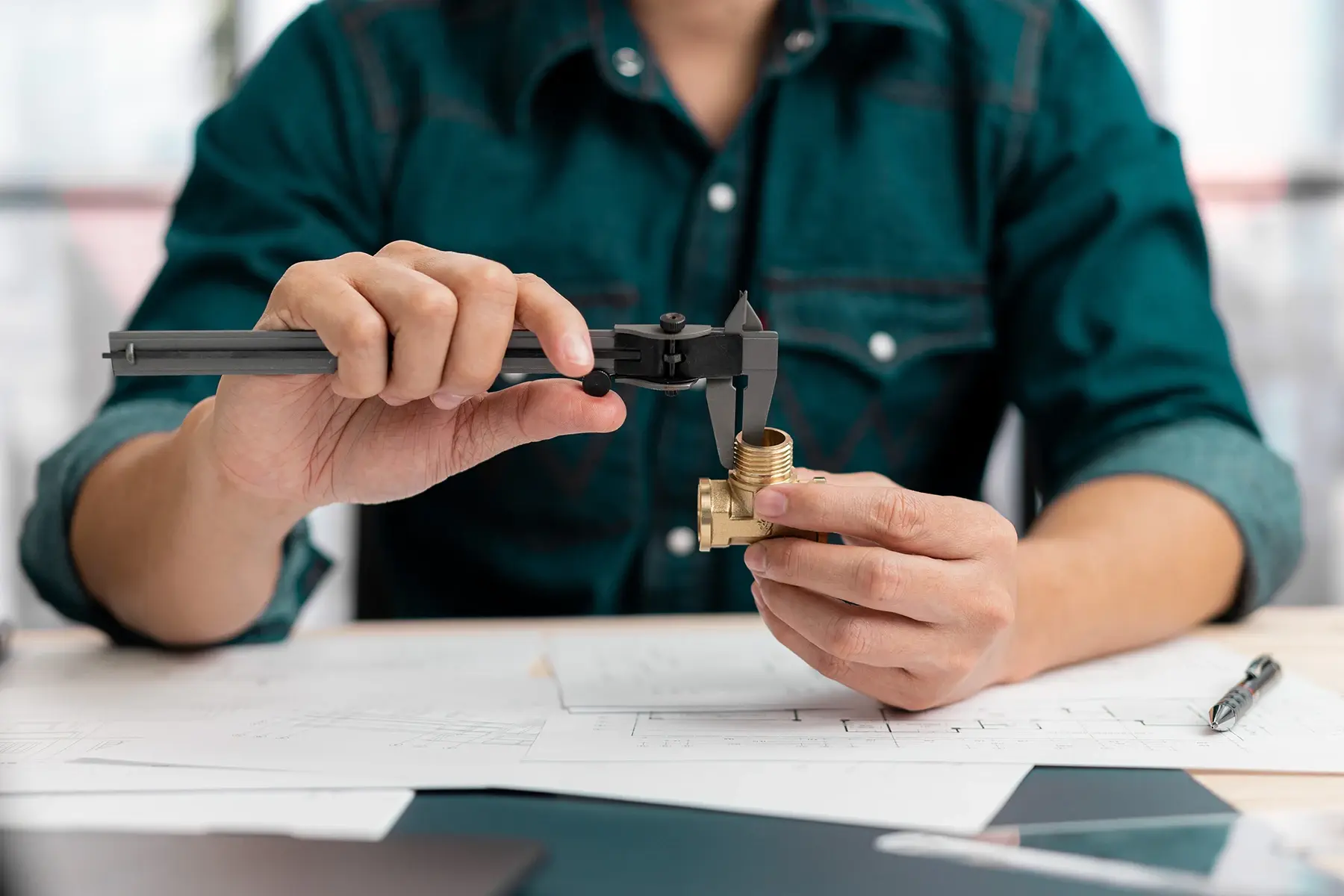
ISO/IEC 17025 accredited calibration is calibration performed by a laboratory that an independent accreditation body has assessed and found technically competent for that specific measurement. The accreditation covers who does the work, how it is done, the equipment used, and the stated measurement uncertainty, all within a published scope.
For quality managers, the difference shows up when an auditor reviews your calibration records. This article explains what accreditation actually verifies, how it differs from a "traceable" calibration, and what your auditor will look for on a certificate.
What Is ISO/IEC 17025?
ISO/IEC 17025:2017 sets the general requirements for the competence, impartiality, and consistent operation of testing and calibration laboratories. It is a conformity assessment standard, written specifically for labs, and accreditation bodies use it as the criteria for assessing them.
That makes it different from a quality management system standard such as ISO 9001. ISO 9001 describes how an organization manages quality. ISO/IEC 17025 goes further for laboratories, covering:
- Technical competence of the people performing each calibration
- Validated methods and documented procedures
- Measurement uncertainty, evaluated and reported for each result
- Metrological traceability of the lab's reference standards
- Impartiality and controls that keep results free from outside pressure
A lab does not become accredited by declaring that it follows the standard. An independent accreditation body, such as A2LA in the U.S., assesses the lab on-site, witnesses work, and reviews records before granting accreditation, then reassesses it on a regular cycle.
Accredited vs. Traceable vs. "Calibrated to 17025"
Calibration providers describe their work in several ways, and the words do not mean the same thing.
|
Claim |
What it means |
Who verified it |
|---|---|---|
|
Accredited calibration |
Performed under the lab's ISO/IEC 17025 accreditation, within its published scope, with uncertainty reported |
An independent accreditation body |
|
Traceable calibration |
The lab says its standards link back to national standards such as NIST |
The lab itself |
|
"Calibrated to 17025" or "17025 compliant" |
The lab says it follows the standard |
Usually no one outside the lab |
Traceability matters, but on its own it is a claim. NIST's traceability policy is clear that supporting a traceability claim is the responsibility of whoever provides the result, and judging it is the responsibility of the user. Accreditation is what gives you independent evidence that the claim holds up.
One more detail: accreditation applies to specific measurements, not to the whole lab. A lab can be accredited for pressure calibration and still perform force calibrations outside its scope. An accredited certificate will carry the accreditation body's mark for work inside the scope.
Why Your Auditor Cares
When your organization is audited to ISO 9001, AS9100, ISO 13485, or a similar standard, the auditor will check how you control measuring equipment. ISO 9001, for example, requires equipment used to verify product conformity to be calibrated against standards traceable to international or national measurement standards, with records to prove it.
Most of these standards do not name ISO/IEC 17025 accreditation as a requirement. IATF 16949 is the main exception: it generally expects external calibration labs to hold ISO/IEC 17025 accreditation, or a national equivalent, for the work they perform. Customer contracts and industry programs can add the same requirement.
Even where accreditation is not required, your auditor will still want to know how you chose your calibration provider and how you know its results are valid. An accredited certificate answers both questions with independent evidence. Without one, you may need to show your own evaluation of the lab's methods, standards, and uncertainty.
In practice, auditors commonly look for:
- A calibration certificate for every instrument that affects product quality
- Traceability to national standards, documented on the certificate
- As-found data, so you can assess product made with an out-of-tolerance instrument
- Current calibration status, shown by labels and records that match
- Evidence that your calibration provider is qualified
For a standard-by-standard breakdown of what seven common quality standards require for calibration, download the ISO/IEC 17025 Conformity Readiness Guide.
What an Accredited Calibration Certificate Includes
ISO/IEC 17025 sets specific content requirements for calibration certificates. An accredited certificate should give you everything you need to show an auditor, including:
- Identification of the instrument, the customer, and the lab, with a unique certificate number
- The accreditation body's mark and the lab's certificate or accreditation number
- Calibration date and the conditions under which the work was performed
- The method used and the reference standards, with evidence of their traceability
- Measurement results at each test point, including as-found and, if adjusted, as-left values
- Measurement uncertainty for each reported result
- A statement of conformity, such as pass or fail, when one is requested, along with the decision rule applied
If a certificate is missing uncertainty or as-found data, ask your provider why. Those two items are the ones auditors and quality engineers rely on most.
How to Check a Lab's Accreditation and Scope
Before you rely on a lab's certificates, confirm three things:
- The accreditation is current. Ask for the accreditation certificate and check the expiration date. Most accreditation bodies also publish a searchable directory of accredited labs.
- The scope covers your instruments. The scope of accreditation lists each measurement parameter, range, and the lab's calibration and measurement capability (CMC), which is the best uncertainty it can achieve. If your instrument or range is not listed, that calibration is not accredited.
- The accreditation body is recognized. In the U.S., look for bodies that are signatories to the ILAC Mutual Recognition Arrangement, such as A2LA. Recognition means results are accepted across member countries.
Keep a copy of the current certificate and scope with your supplier records. It is one of the first documents an auditor may ask for when reviewing your calibration provider.
Aldinger's ISO/IEC 17025 Accreditation
Aldinger is accredited by A2LA to ISO/IEC 17025:2017 for a wide range of calibration disciplines, including dimensional, electrical, force, mass, pressure, temperature, and torque. You can view the full scope of accreditation online.
With teams in Dallas, Houston, and Little Rock, Aldinger performs accredited calibration services on-site at your facility or in our laboratory. Every certificate is available anytime through Aldinger's complimentary asset tracking, so the records your auditor asks for are a few clicks away.
ISO/IEC 17025 Calibration FAQ
Does ISO 9001 require ISO/IEC 17025 accredited calibration?
No. ISO 9001 requires calibration traceable to international or national standards, but it does not require the lab to be accredited. Many organizations choose accredited labs anyway, because accreditation is the simplest way to show an auditor that a provider is qualified.
Is there such a thing as an ISO/IEC 17025 audit?
Not in the way the term is usually used. Labs are assessed against ISO/IEC 17025 by an accreditation body, which is a conformity assessment process. Audits apply to your own quality system, such as ISO 9001 or AS9100.
What is the difference between ISO/IEC 17025 and ISO 9001?
ISO 9001 is a quality management system standard that applies to any organization. ISO/IEC 17025 is written specifically for testing and calibration labs and adds requirements for technical competence, measurement uncertainty, and traceability.
Are accredited calibrations more expensive?
Sometimes slightly, because of the added data and documentation. For many organizations, the cost is offset by fewer questions during audits and less time spent evaluating calibration suppliers.
How do I know if a specific calibration is accredited?
Check the certificate for the accreditation body's mark and confirm the instrument and range appear in the lab's published scope of accreditation.
Get Your Calibration Program Audit-Ready
Know exactly what your quality standard requires before your auditor asks. The free ISO/IEC 17025 Conformity Readiness Guide covers seven common standards clause by clause, with a certificate checklist and guidance on intervals and out-of-tolerance findings.
Ready to work with an accredited lab? View Aldinger's accreditation or Schedule Now.
Accurate Calibration That Keeps You Audit-Ready.
-
ISO/IEC 17025 accredited calibration laboratory
-
Comprehensive calibration services with fast turnaround
-
Mail-in and on-site options available
- Your trusted calibration partner for more than 50 years