

Temperature Uniformity Surveys
Temperature Uniformity Survey Services from Aldinger
Furnaces, ovens, freezers, refrigerated storage, and other temperature-controlled equipment do not always maintain the same temperature throughout the chamber. Even when the control system shows the correct setpoint, hot spots, cold spots, and uneven zones can still occur.
Temperature Uniformity Surveys measure how consistently equipment holds temperature across its full working area. This helps manufacturers and facilities document process control, meet customer requirements, and support consistent results in both high-heat and cold-storage applications.
Aldinger provides Temperature Uniformity Survey services that give you clear, documented confidence in your temperature-controlled equipment.
We provide these services for many types of equipment, including:
- Autoclaves
- Environmental Chambers
- Environmentally Controlled Manufacturing and Critical Storage areas
- Freezers and Refrigerators
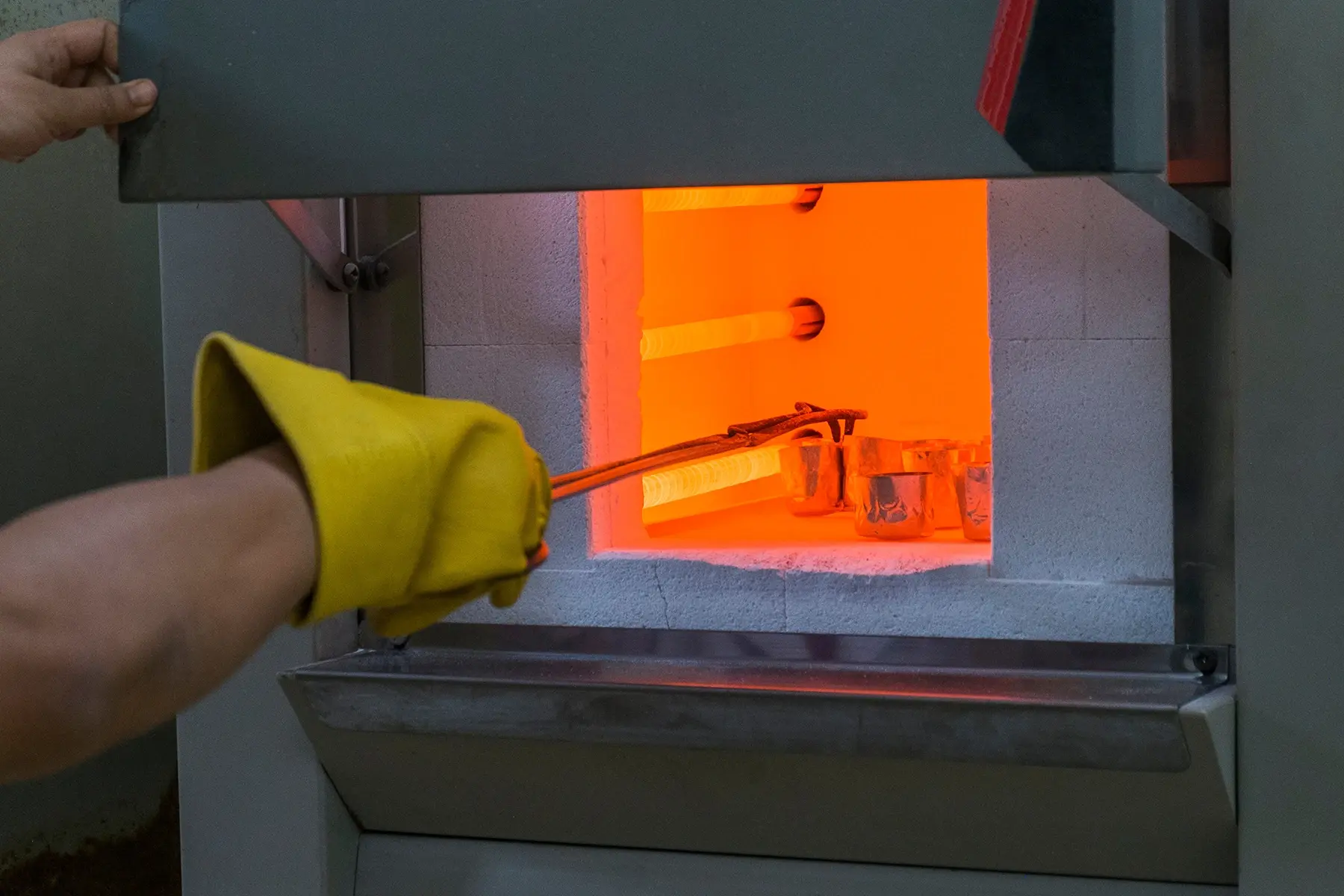
- Furnaces and Ovens
- Temperature Chambers
What is a Temperature Uniformity Survey?
A Temperature Uniformity Survey (TUS) uses multiple calibrated temperature sensors placed throughout a chamber’s working area to measure and document temperature consistency across the full load. Instead of checking accuracy at just one control point, a TUS shows the actual temperature conditions your product experiences inside the equipment. This helps identify hot spots, cold spots, and temperature variation in heat treat furnaces, industrial ovens, cold storage freezers, and refrigerated chambers.
During the survey, technicians place sensors based on the required grid pattern and chamber size, then monitor and record temperatures as the equipment stabilizes at the target setpoint. The results are compiled into a detailed report that shows the temperature at each test location, the difference between the highest and lowest readings, and whether the equipment meets the required uniformity classification.
For heat treat applications, TUS results often support compliance with SAE AMS 2750 (Pyrometry) and AIAG CQI-9 (Heat Treat System Assessment). Surveys are also typically supported by System Accuracy Tests and calibration of the temperature controllers, control sensors, and temperature recorders that make up the full thermal control system.
Why Temperature Uniformity Surveys Are Essential for Your Operations
Consistent, Predictable Results
Uneven temperature means some product in a load may be within specification while other portions fall outside it. A documented TUS identifies these variations before they affect production or storage, allowing you to correct problem zones, adjust load configurations, or better understand the reliable working zone within your equipment.
Complete Temperature System Verification
Temperature uniformity is only part of the picture—the controllers, sensors, and recorders that manage and document the process must also be accurate. Verifying the complete system, not just the chamber itself, ensures that what your instruments report reflects what your product is actually experiencing.
Industry Standard and Quality System Compliance
Heat treat operations often require documented uniformity data to meet AMS 2750 and AIAG CQI-9 requirements. Beyond heat treating, many customers and quality management systems across industries—including cold storage, pharmaceuticals, and food safety—require objective, documented proof that temperature-controlled equipment maintains uniformity within a specified tolerance.
Cold Chain and Storage Integrity
Freezers, refrigerated storage, and cold chambers require the same rigor as high-temperature equipment. Uneven cooling can put temperature-sensitive product at risk, whether that's food, pharmaceuticals, or other perishable materials. A TUS confirms that cold storage equipment maintains consistent temperature throughout, protecting product integrity from corner to corner.
Equipment Performance Insight
Beyond compliance, uniformity data helps you understand your equipment's actual performance characteristics—where the most reliable zones are located, how load size and configuration affect distribution, and when equipment may be due for maintenance or repair.
Audit-Ready in 3 Simple Steps
Submit Your Equipment List
Send us a list of the equipment you need calibrated, and we’ll provide a tailored quote with clear pricing—no hidden fees.
Schedule Your Calibration
Choose a convenient time for an in-lab or on-site equipment calibration. Our certified technicians ensure precision and compliance with ISO/IEC 17025 standards.
Stay Compliant & Audit-Ready
Receive detailed calibration reports and certification, giving you peace of mind for audits and operational excellence.